The holidays are a time of More. More parties, more social gatherings, more celebrations… And more drinking. Many of the usual drinking rules are relaxed during the holiday season. Drinking in the daytime for example, and drinking at the workplace where office parties often add alcohol to the mix. More drinking and driving occurs during the holidays than at any other time of the year. Sometimes people who don’t normally drink much may indulge in more than they intended and trouble often follows.
It’s not true that increased drinking causes alcoholism—alcoholism is a disease with many “causes.” Just because someone drinks more frequently, or consumes more alcohol than they usually do, doesn’t mean he or she has become an alcoholic. But there are warning signs that drinking may be a problem, for example:
- Starting to drink earlier in the day.
- Increased drinking (drinking every day or every few days, or drinking increased quantities).
- Continuing to drink when they’ve “had enough.”
- Denying they’ve “had enough.”
- Urging others to “have one more” when they’ve said no thanks.
- Including alcohol in every activity.
- Always making sure there’s “enough” alcohol (buying excess liquor for gatherings).
- Refusing to discuss it when someone expresses concern about their drinking.
Alcoholism is a family disease. That means it affects not just the person who drinks, but everyone in the family—they’re called co-alcoholics, and they may need help as much as the alcoholic.
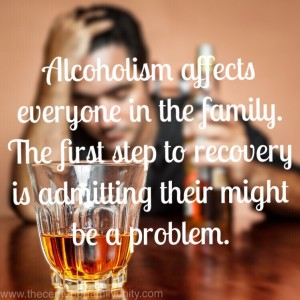
The most common symptom of alcoholism is denial that there’s a problem; the first step in recovery is admitting there might be a problem. Take the quizzes below and if there is a concern call a Christian counselor at the Center for Family Unity in San Diego. Or, if alcohol has caused a problem in your life during the holidays and you’d like to talk about it, don’t hesitate to call.
Twenty questions to determine if you might have a problem with alcohol.
- Do you lose time from work due to your drinking?
- Is drinking making your home life unhappy?
- Do you drink because you are shy with other people?
- Is drinking affecting your reputation?
- Have you ever felt remorse after drinking?
- Have you gotten into financial difficulties as a result of your drinking?
- Do you turn to lower companions and an inferior environment when drinking?
- Does your drinking make you careless of your family’s welfare?
- Has your ambition decreased since drinking?
- Do you crave a drink at a definite time daily?
- Do you want a drink the next morning?
- Does drinking cause you to have difficulty in sleeping?
- Has your efficiency decreased since drinking?
- Is drinking jeopardizing your job or business?
- Do you drink to escape from worries or troubles?
- Do you drink alone?
- Have you ever had a complete loss of memory as a result of your drinking?
- Has your physician ever treated you for drinking?
- Do you drink to build up your self-confidence?
- Have you ever been in a hospital or institution on account of drinking?
If you answered yes to three or more of these questions, you might have a problem with alcohol. A counselor at The Center for Family Unity is waiting to help you today.
Twenty questions to determine if you’re affected by the excessive drinking of someone close.
- Do you worry about how much someone else drinks?
- Do you have money problems because of someone else’s drinking?
- Do you tell lies to cover up for someone else’s drinking?
- Do you feel that if the drinker loved you, he or she would stop drinking, to please you?
- Do you blame the drinker’s behavior on his or her companions?
- Are plans frequently upset, or cancelled, or meals delayed because of the drinker?
- Do you make threats, such as, “If you don’t stop drinking, I’ll leave you”?
- Do you secretly try to smell the drinker’s breath?
- Are you afraid to upset someone for fear it will set off a drinking bout?
- Have you been hurt or embarrassed by a drinker’s behavior?
- Are holidays and gatherings spoiled because of drinking?
- Have you considered calling the police for help in fear of abuse?
- Do you search for hidden alcohol?
- Do you often ride in a car with a driver who has been drinking?
- Have you refused social invitations out of fear or anxiety?
- Do you sometimes feel like a failure when you think of the lengths you have gone to in order to control the drinker?
- Do you think that, if the drinker stopped drinking, your other problems would be solved?
- Do you ever threaten to hurt yourself to scare the drinker?
- Do you feel angry, confused or depressed most of the time?
- Do you feel there is no one who understands your problems?
If you answered yes to three or more of these questions, call The Center for Family Unity for San Diego family counseling immediately. Don’t live another day in bondage. www.thecenterforfamilyunity.com 619-884-0601